

A breakfast–lunch–dinner memo pad does not have to be used only as a record. The same three-box layout can become a daily meal log, a mini meal plan, a food-journal card, a journal decoration element or a place to note calories and macros. Choose what each sheet is for before you begin, then use the blank back when you want a little more context.
What can you do with a three-meal memo pad?
The printed labels provide a simple structure, not a rule. Here are four practical ways to use the same small page.
| Use | What to write | What to do with the sheet |
|---|---|---|
| Daily meal log | What you ate for breakfast, lunch and dinner | Keep it visible during the day, then save or discard it |
| Mini meal plan | The three meals you intend to make or buy | Place it by your planner, fridge or grocery list |
| Food journal or journal deco | A favorite bite, rating, memory, tiny doodle or sticker | Tape or glue the finished sheet into a journal spread |
| Calories or macro notes | Numbers from labels, recipes or a tracking app | Use it as a visible summary, not as the source of the calculation |
1. Use it as a daily meal log
Write recognizable meal names instead of trying to create a perfect nutrition record. “Yogurt, blueberries, chia” or “leftover pasta + salad” is enough for quick recall. Add a time, snack or short context note on the blank back if it helps.
This version is useful for remembering what you ate, spotting meals you repeat and seeing which groceries actually become meals. You can keep selected sheets in a journal or let each one be temporary.
2. Turn it into a tiny meal plan
Fill the three boxes before the day begins. Breakfast might say “overnight oats,” lunch “leftovers,” and dinner “tacos.” The small format keeps the plan specific without asking you to build a full weekly menu.
For grocery planning, add one missing ingredient beside the relevant meal or write a short shopping reminder on the back. If plans change, cross out the meal and write the replacement—the sheet is a working note, not a contract.
3. Add it to a food journal or journal-deco spread
Use the boxes for more than food names: add a tiny rating, a color swatch, a sticker, a doodle or one sentence about the day. You might record the best meal only, turn each box into a mini collage, or use the entire sheet as a decorative layer in a planner or scrapbook.
Because each sheet tears off, it can become an insert-like journaling element. Attach it with washi tape, a glue runner or a paper clip; the pad itself is non-adhesive.
4. Use it for calorie or macro notes
If you already get calorie or macro information from food labels, recipes or an app, write the meal totals in the three boxes and use the back for a daily total. You can also note protein, fiber or another number that matters to your own routine.
The memo pad does not calculate nutritional values, confirm serving sizes or replace a detailed tracker. It works best as a quick paper summary of information you obtained elsewhere. Follow a qualified professional’s format when tracking for a medical or clinical reason.
Mix the uses across the pad
You do not have to commit all 50 sheets to one system. Use Monday’s sheet as a meal plan, Tuesday’s as a food log and a special dinner sheet as journal decoration. A small undated pad is useful precisely because each page can have a different job.
Try one sheet four different ways
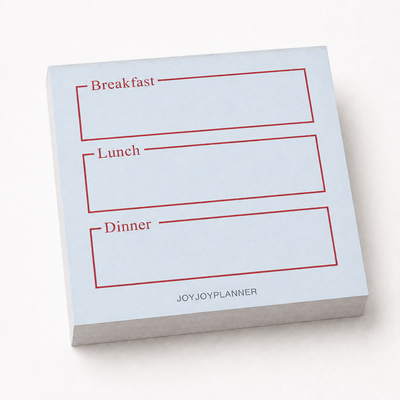
The JOYJOY Daily Meal Log Mini Notepad has one box each for breakfast, lunch and dinner. It measures exactly 50 × 50 mm (approximately 2 × 2 in), contains 50 non-adhesive tear-off sheets, and has a blank back for extra notes or decoration. See all five formats in the Memo Pads collection.
Daily Meal Log Mini Notepad
Three simple meal boxes · 50 × 50 mm · 50 tear-off sheets · non-adhesive
$5.99 · Currently unavailable
View ProductIf you prefer a refillable system with more room, start with what planner inserts are and how to choose them. For a connected desk-and-binder routine, see how to build a ring planner system.
Daily food log FAQ
Is a food log the same as a meal planner?
No. A food log records what happened; a meal planner usually plans future meals.
Can I use the pad for meal planning instead of logging?
Yes. Fill the breakfast, lunch and dinner boxes before the day begins, then change the plan directly on the sheet if needed.
Can I put the sheets in my journal?
Yes. Tear off a completed sheet and attach it with washi tape, adhesive or a paper clip. Individual sheets are not sticky notes.
Can I track calories on it?
Yes, as a compact place to copy calorie or macro numbers from labels, recipes or an app. The pad itself does not calculate or verify nutritional information.
Do I need to record snacks?
Only if they matter to your purpose. On a small sheet, add a short snack note beside the closest meal or use the blank back.
Should I keep every sheet?
No. Review and discard it if the note has served its purpose, or tape selected sheets into a journal if you want a longer record.